
🎯 Overall Outcome
By the end of the FCE course, students will be able to communicate effectively and confidently in an English-speaking environment at an upper-intermediate (B2) level. They will be fully prepared to take the Cambridge B2 First exam and achieve a passing grade (Grade C or higher).
📚 Specific Outcomes by Skill
1. Reading & Use of English
Understand main ideas, details, and opinions in complex texts (e.g., articles, reports, reviews).
Identify text structure, tone, and purpose.
Use a range of grammatical structures (e.g., passive voice, conditionals, modals, reported speech).
Complete word formation, key word transformation, and open cloze tasks.
Manage time effectively across 7 parts of the paper.
2. Writing
Write essays, articles, reviews, reports, and emails/letters appropriate for purpose, target reader, and register (formal/neutral/informal).
Organize ideas logically with clear paragraphs and cohesive devices.
Use B2-level vocabulary (e.g., collocations, phrasal verbs, linking expressions).
Show control of grammar and punctuation to avoid loss of meaning.
3. Listening
Understand the main ideas and specific information from monologues and conversations (e.g., interviews, lectures, casual talk).
Identify speaker attitude, opinion, feeling, and purpose.
Follow different accents (e.g., British, American, Australian).
Complete multiple-choice, sentence completion, and multiple-matching tasks.
4. Speaking
Interact fluently in a 4-part speaking test with another candidate and an examiner.
Compare and contrast photos, express opinions, and speculate.
Collaborate to make decisions or solve a problem (pair discussion).
Answer follow-up questions independently with extended answers.
Use a range of discourse markers and conversational strategies (e.g., agreeing, disagreeing politely, asking for clarification).
✅ Exam Readiness Outcomes
Understand the format, timing, and scoring of each paper.
Develop exam strategies like eliminating wrong answers, paraphrasing, and managing time under pressure.
Identify common mistakes (e.g., false friends, preposition errors, register shifts) and avoid them.
Complete at least 3 full authentic practice tests with time limits.
🧠 Real-World Language Outcomes
Read news articles, blogs, and short stories with ease.
Write clear, detailed emails or posts for work or study.
Follow TV shows, podcasts, or lectures on familiar topics.
Hold conversations on abstract or cultural topics (e.g., environmental issues, travel experiences, future plans).
🎯 General Description
You will be able to use English independently and flexibly in everyday situations, work environments, and academic contexts. You will no longer just “survive” in English — you will express opinions, write clearly, understand native speakers, and handle conversations on unfamiliar topics with confidence. You will also be fully prepared to pass the Cambridge B2 First (FCE) exam.
📖 Reading & Use of English – Description
You will be able to:
Read and understand newspaper articles, blog posts, emails, and short stories without needing a dictionary for every word.
Guess the meaning of unknown words from context.
Understand feelings and opinions hidden between the lines (e.g., sarcasm, disappointment, enthusiasm).
Complete grammar tasks like transforming sentences (“Someone stole my phone” → “I had my phone stolen”) and forming correct word families (“compete” → “competition” → “competitive”).
Manage your time so you finish all 7 parts of the exam paper.
Real-life example: You can read a hotel review online and understand not just the facts, but whether the writer is truly angry or just slightly annoyed.
✍️ Writing – Description
You will be able to:
Write essays, articles, emails, reports, and reviews for different audiences (a boss, a friend, a magazine editor).
Organize your writing into clear paragraphs with topic sentences.
Use linking words (however, moreover, as a result) to connect ideas smoothly.
Choose the right tone — formal for a complaint letter, neutral for a report, friendly for an email to a classmate.
Avoid common mistakes like run-on sentences, missing articles, or wrong prepositions.
Real-life example: You can write a complaint email to a company, a review of a restaurant for a website, or a short report for your manager about a project.
🎧 Listening – Description
You will be able to:
Follow conversations, news clips, interviews, and short lectures spoken at natural speed.
Understand different accents (British, American, Australian, etc.).
Identify a speaker’s attitude — are they excited, bored, worried, or sarcastic?
Pick out specific details (times, prices, names) even when other noise or information is present.
Complete listening tasks like multiple-choice, sentence completion, and matching speakers to opinions.
Real-life example: You can listen to a podcast episode or watch a YouTube video in English and understand the main points without subtitles.
🗣️ Speaking – Description
You will be able to:
Have a 4-part conversation with another student and an examiner without long pauses or panic.
Compare two photos and explain what’s similar, different, and what might be happening.
Work with a partner to make a decision (“Which activity is best for a school trip?”).
Express and justify opinions (“In my view…”, “The reason I think this is…”).
Politely agree, disagree, interrupt, or ask for clarification (“I see your point, but have you considered…”).
Real-life example: You can join a group discussion at work or school, share your opinion confidently, and respond to others’ ideas naturally.
🧠 Exam Preparation – Description
You will be able to:
Understand the exact format of each of the 4 exam papers.
Use time management strategies (e.g., skip difficult questions and return later).
Recognize typical traps (e.g., “distractors” in listening, false friends in reading).
Complete full practice tests under real exam conditions.
Analyze your own mistakes and improve before the real exam.
Real-life example: On exam day, you will not feel surprised by any question type — you will already know exactly what to expect and how to approach each task.
🌍 Real-World English – Description (Bonus)
Beyond the exam, you will be able to:
Travel — book hotels, ask for directions, complain about a problem, and chat with locals.
Work — write professional emails, attend meetings, give short presentations.
Study — take notes in an English class, understand textbooks, write simple academic essays.
Enjoy media — watch TV series without subtitles, understand song lyrics, read news in English.
✅ Summary Table for Quick Reference
Skill What you will be able to do
Reading Understand articles, blogs, and stories; guess new words; find opinions.
Writing Write essays, emails, reviews, reports — correctly organized and with the right tone.
Listening Follow natural speech, different accents, and speaker feelings.
Speaking Compare photos, discuss with a partner, express opinions, handle a full exam interview.
Exam Finish all papers on time, avoid common traps, pass the B2 First exam.
Real life Travel, work, study, and enjoy media in English with confidence.
📋 Student Prerequisites (Entry Requirements)
Before joining an FCE preparation course, students should be able to:
Language Level
Have a solid B1 (Intermediate) level or higher — ideally a PET (Preliminary English Test) pass or equivalent.
Understand the main points of clear, standard speech on familiar topics (work, school, leisure).
Communicate in simple, connected sentences when traveling, talking about hobbies, or describing past events.
Write a basic paragraph with few major grammar errors.
Know present, past, and future tenses (simple, continuous, perfect) at a basic level.
Recommended Placement Test Score
Cambridge placement test: B1+ to B2 range.
CEFR self-assessment: Can understand longer texts and follow extended conversations with some effort.
Age & Motivation
Typically 15+ years old (some schools accept mature 14-year-olds with strong English).
Willing to complete 2–3 hours of homework per week.
Planning to take the official B2 First exam (or genuinely wants upper-intermediate skills).
⚠️ If students are below B1, they will struggle — consider a B1+ bridging course first.
📚 Course Materials & Resources
Required for Each Student
Item Example
Coursebook Complete First (Cambridge), Ready for First (Macmillan), or Objective First
Workbook Usually comes with the coursebook — for grammar and vocabulary practice
Exam practice book B2 First Trainer, Cambridge English First 1–3 (authentic past papers)
Notebook For class notes, error correction, and vocabulary logs
Access to audio CDs or online listening files (for homework)
Recommended for Classroom
Answer keys for self-study checking
Online platform (e.g., Cambridge One, Kahoot, Quizlet for flashcards)
Timer for exam practice
Projector or screen for sample answers and photo speaking practice
Free/Supplementary Resources (Optional but helpful)
BBC Learning English (B2 level)
Flo-Joe (FCE-specific daily exercises)
YouTube: Cambridge English Speaking videos (real exam examples)
👩🏫 Teacher Qualifications
An effective FCE teacher should have:
Native or near-native English proficiency (CEFR C1/C2).
Experience teaching B2 level — ideally 1+ years.
Familiarity with the Cambridge B2 First exam format (each paper, timing, scoring).
Ability to explain exam strategies (e.g., how to do key word transformations or compare photos).
Skills in error correction that builds confidence, not fear.
Access to authentic sample answers (writing and speaking) to show students.
💡 A teacher who has passed the CELTA, DELTA, or TEFL with exam preparation modules is ideal.
🏫 Classroom & Logistical Requirements
Category Requirement
Class size Ideally 6–12 students (max 15 for effective speaking practice)
Class length 90–120 minutes per session (shorter sessions reduce focus)
Course duration 8–12 weeks (intensive) or 6–9 months (part-time)
Frequency 2–3 times per week
Room setup Movable chairs for pair work and group discussions
Tech needed Computer, speakers/monitor for listening, projector for sample answers
Exam booking School should help students register for the official exam (dates: March, May, June, August, November, December typically)
📝 Student Commitment Requirements
To succeed, each student should agree to:
Attend at least 85% of classes.
Complete weekly homework (grammar, reading, writing drafts).
Memorize 20+ new words/phrases per week (using a vocabulary notebook or app).
Record themselves speaking at home for self-assessment (optional but helpful).
Take 3 full mock exams during the course (timed, under exam conditions).
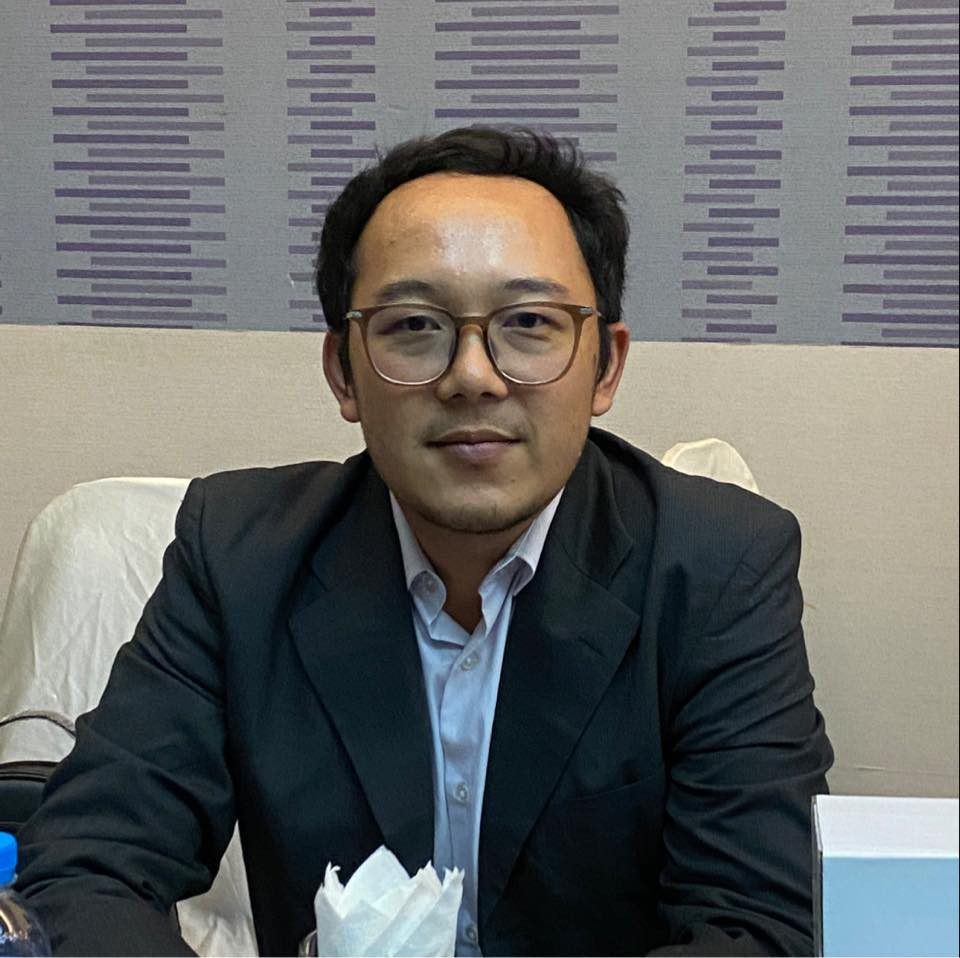
Name : Sai Say Pan Pha
Academic : B.A English
I am a dedicated and multifaceted educator and management professional with over eight years of experience in teaching, training, and educational leadership. My career is driven by a passion for fostering learning environments and a commitment to community development, spanning the private sector, non-profit organizations, and international schools.
My academic foundation includes a **Bachelor of Arts in English** from the University of Lashio, complemented by an **Executive Diploma in Business Administration & Management (EDBAM)** from MESI University College. This unique blend of liberal arts and business management allows me to approach education with both a creative and a strategic mindset. I further enhanced my professional toolkit with specialized training in **Project Cycle Management (PCM)** and **Early Childhood Care and Development**, reflecting a deep commitment to holistic and structured educational practices.
My professional journey has been rich and varied. I began as a **Volunteer Teacher** at Shan National School, teaching Science, Computer Basics, and the Myanmar language, while also taking on monitoring and reporting responsibilities. This hands-on experience in the classroom ignited my passion for curriculum and operations, leading me to a role as **Manager at Sanctuary Education Center**, where I oversaw class management, finance documentation, and daily operations.
In 2018, I co-founded **Success Kids Garden**, an experience that allowed me to fully utilize my skills in curriculum preparation, lesson planning, student records, and even social media design. This entrepreneurial venture was a natural precursor to founding my own enterprise, **Mr-Stemsy Training Center**, which I have led since 2018, focusing on delivering quality training programs.
My expertise has been highly valued in the NGO/INGO sector, where I have contributed as a **translator** for organizations like Geneva Call, the ICRC, and Search for Common Ground, specifically on documents related to peace processes. This work underscores my advanced language proficiency and my ability to handle sensitive and complex information.
For the past several years, I have been an integral part of **Bright Stars International School**. My roles have evolved from a **Freelance English Trainer (YLE)** to a full-time **English & Social Studies Subject Teacher**, and most recently, to my current position as **Head of the ICT Department** (since April 2025). This progression highlights my adaptability, leadership, and technical competence.
Beyond my professional roles, I hold an **Active Citizenship** certification, demonstrating a profound understanding of Myanmar's political reform processes and recent history. I am a **quick learner** with key competencies in communication, training, facilitating, organizing, and analyzing. My technical skills are extensive, encompassing the **Adobe Creative Suite** (Photoshop, Illustrator, XD, InDesign), **video editing software** (Camtasia, Power Director), and various other educational and productivity tools. I am fluent in Shan and Burmese and possess an intermediate proficiency in English.
I am eager to leverage my diverse background in education, management, and technology to create impactful learning experiences on this platform.
FCE
No Review found